Your Implant Is in Trouble. Can It Be Saved?

Your Implant Is in Trouble. Can It Be Saved?
You were told implants last a lifetime. Now the gum around one is swollen, it bleeds when you brush, maybe there's a bad taste, and somebody has used the word "bone loss."
Here's the honest answer: often, yes, it can be saved — and the odds depend heavily on how early you're reading this.
Implants Don't Get Cavities. They Get Something Else.
An implant can't decay. There's no nerve, no enamel, nothing to form a cavity in.
What an implant can lose is the bone holding it.
The same bacteria that cause gum disease around natural teeth colonize the surface of an implant. Your body responds with inflammation. If that inflammation goes unchecked, it moves below the gumline and starts destroying the bone that the implant is fused to.
An implant with no bone around it has nothing to hold it. That's how implants fail.
Two Different Problems, and the Difference Matters Enormously
Peri-implant mucositis is inflammation of the soft tissue around an implant, with no bone loss. The gum is red, puffy, and bleeds when touched. The bone underneath is intact.
This is reversible. Professional cleaning and better home care around the implant resolve it. Think of it as gingivitis for implants.
Peri-implantitis is what mucositis becomes when it's left alone. The inflammation has moved below the gumline and bone is being lost. Pockets deepen. On an X-ray, the bone level around the implant has dropped.
This is not reversible in the sense that the bone comes back on its own. It is treatable, and in many cases bone can be rebuilt — but the goal shifts from reversing to stopping and reconstructing.
The difference between catching it at mucositis and catching it at advanced peri-implantitis is the difference between a cleaning and a surgery. That's the entire reason this article exists.
What to Watch For
Early signs, worth mentioning:
- Gum around the implant is red, puffy, or tender
- Bleeding when you brush or floss around it
- The gum looks different around that implant than around your other teeth
Signs worth calling about:
- Persistent bad taste or odor from that area
- Pus or discharge
- The gum has receded and you can see metal
- Food packing around the implant in a way it didn't before
- Discomfort when chewing on it
Call today:
- The implant or crown feels loose or moves
- Facial swelling
- Significant pain
One thing that makes this difficult: peri-implantitis is often painless until it's advanced. An implant has no nerve, so the early warning system you'd have with a natural tooth isn't there. Plenty of people discover it on a routine X-ray.
That's why implants need monitoring even when nothing hurts.
Why It Happened
It's rarely one thing.
A history of gum disease is the strongest predictor. The bacteria that caused periodontal disease around your natural teeth are still present, and implants are not immune to them.
Smoking impairs healing and raises the risk substantially.
Diabetes that isn't well controlled affects the inflammatory response and healing.
Home care that doesn't reach the implant. Implant crowns are often bulkier at the base than natural teeth, creating spaces that are genuinely harder to clean.
Missed maintenance. Implants need professional monitoring on a schedule. Plenty of people stop coming once the implant is done, on the reasoning that it can't decay.
Cement left behind from when the crown was seated, if cement was used — a known cause of inflammation that can go undetected for years.
Excessive bite force, including from grinding.
Position and how much bone was there originally.
One thing worth saying plainly: this often isn't your fault. Several of these have nothing to do with how well you brush.
What Treatment Looks Like
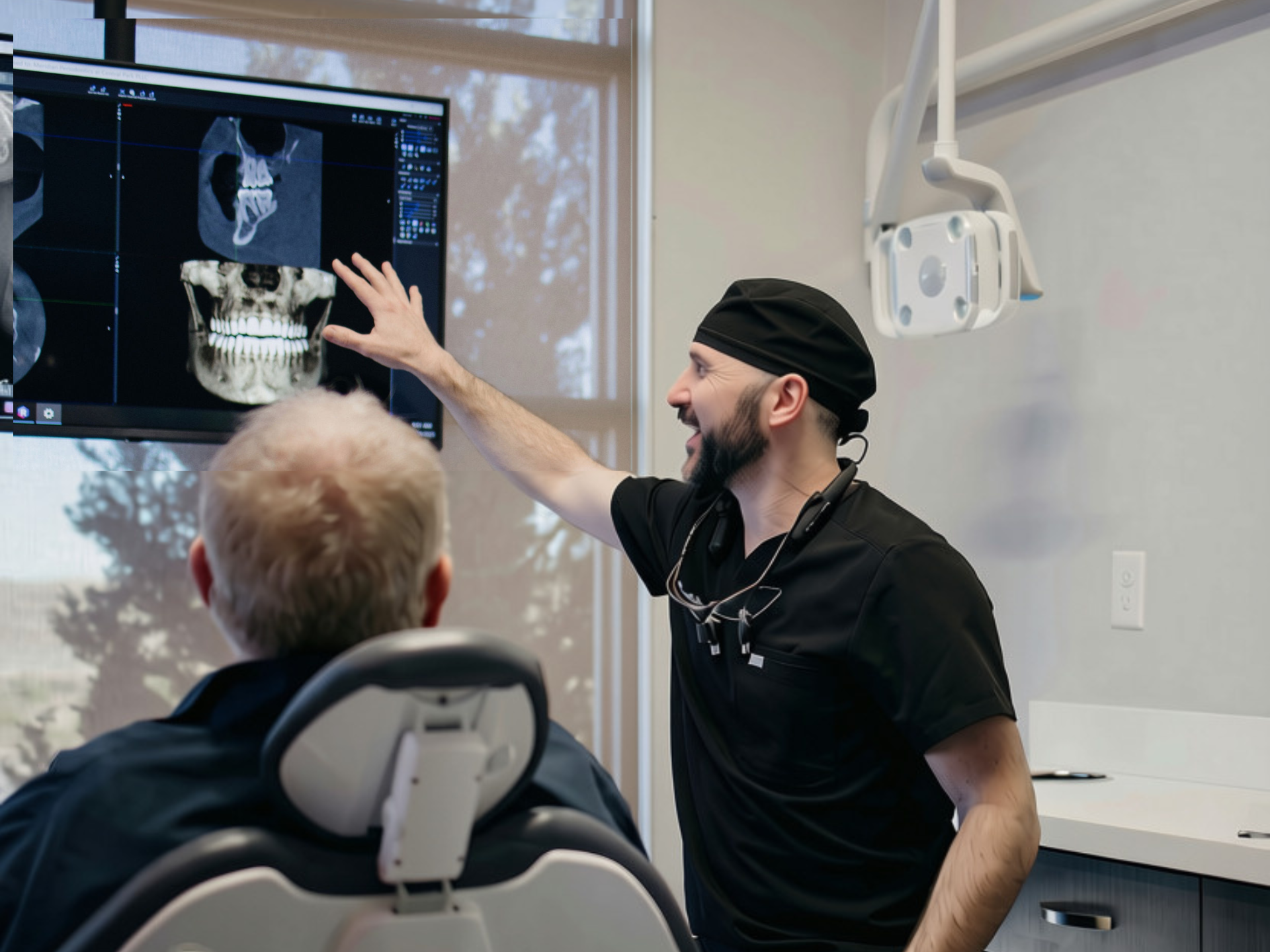
It depends entirely on how far it's progressed, which is why the evaluation comes first — measurements around the implant and an X-ray to see the bone level.
If it's mucositis — no bone loss yet — treatment is non-surgical. Professional cleaning of the implant surface, adjustments to home care, sometimes a localized antimicrobial. Then re-evaluation to confirm it resolved.
If there's bone loss, the implant surface has to be decontaminated, and that's the central difficulty. An implant surface is textured and threaded, which is excellent for fusing to bone and poor for cleaning. Hand instruments can't reach into the threads.
This is where laser therapy is particularly useful. The laser decontaminates the implant surface in a way mechanical instruments struggle to, and it's one of the strongest applications for it.
Treatment at this stage generally involves accessing the area surgically, thoroughly decontaminating the implant surface, and then either reshaping the surrounding bone or attempting to regenerate it with a graft and membrane.
If it's advanced, meaning most of the supporting bone is gone, the honest conversation is about whether the implant is worth saving. Sometimes removing it, letting the site heal, grafting, and placing a new implant produces a better long-term result than trying to rescue one with little support left.
What to Expect, Honestly
Treatment can arrest peri-implantitis and, in selected cases, rebuild a meaningful amount of lost bone. Published case series with long follow-up show implants remaining stable years after regenerative treatment.
Two honest caveats.
The evidence base is thinner than for periodontal treatment around natural teeth. Much of it is case series and smaller studies rather than large randomized trials. The field is still establishing which approaches work best for which defects.
Outcomes vary by how much bone is left and the shape of the defect. Some defects are well suited to regeneration. Others aren't, and the realistic goal is stopping progression rather than rebuilding.
You should get a specific answer about your implant — favorable, guarded, or poor — not a general reassurance.
Keeping It From Coming Back
Peri-implantitis is a chronic condition. Treating it doesn't make you immune to it.
- Maintenance visits on the interval you're given, usually every three to four months
- Cleaning around the implant specifically, which may need different tools than your natural teeth
- Not smoking
- Diabetes control if that applies
- A nightguard if you grind
Frequently Asked Questions
Q: What is peri-implantitis? Peri-implantitis is inflammation around a dental implant that has progressed to destroying the bone supporting it. It's caused by bacteria colonizing the implant surface, much like gum disease around natural teeth. Unlike natural teeth, implants can't decay — losing bone is how they fail.
Q: What's the difference between peri-implant mucositis and peri-implantitis? Mucositis is inflammation of the soft tissue only, with no bone loss, and it's reversible with professional cleaning and better home care. Peri-implantitis means the inflammation has reached the bone and bone is being lost. That bone doesn't return on its own, though in selected cases it can be rebuilt surgically.
Q: Can a failing implant be saved? Often, yes — and the odds depend on how much bone remains. Early cases respond well to non-surgical treatment. Moderate bone loss usually requires surgical access, decontamination of the implant surface, and sometimes bone grafting. When most of the supporting bone is gone, removing and replacing the implant may give a better long-term result than trying to save it.
Q: Does peri-implantitis hurt? Often not, until it's advanced. An implant has no nerve, so the early warning you'd get from a natural tooth isn't there. Many cases are found on a routine X-ray before the patient notices anything, which is why implants need monitoring even when nothing feels wrong.
Q: What causes peri-implantitis? Usually several factors together. A history of gum disease is the strongest predictor. Others include smoking, poorly controlled diabetes, home care that doesn't reach the implant, missed maintenance visits, cement left behind when the crown was seated, and excessive bite force from grinding.
Q: How is the implant surface cleaned? This is the central challenge — an implant surface is textured and threaded, which is excellent for bonding to bone and poor for cleaning, since hand instruments can't reach into the threads. Laser decontamination is particularly useful here and is one of the strongest applications for laser therapy in periodontics.
Get a Specific Answer
If something about one of your implants has changed, the useful step is measurements and an X-ray. That tells you whether you're looking at mucositis or bone loss, how much, and what the realistic options are.
You should leave knowing the prognosis for that specific implant — favorable, guarded, or poor — rather than a general reassurance.
If your implant was placed elsewhere, that's fine. We treat implant complications regardless of who placed them, and we're glad to give a second opinion if you've been told the implant can't be saved and want another look.
Related Reading
- Peri-implantitis & Implant Complications
- Dental Implant Timeline
- Laser Gum Treatment
- The Four Stages of Gum Disease
- Dental Implants
Questions About an Implant?
We see patients at two Denver-area locations — Central Park in Denver and Westpark in Westminster. Call (720) 703-9116.
Medically reviewed by Kyle Diehl, DDS, PhD, board-certified periodontist. Last updated November 2026.
Connect
with us
wE CAN’T WAIT TO MEET YOU
Call 720.703.9116 or request an appointment online to set up your first visit. We’ll be in touch soon.
